
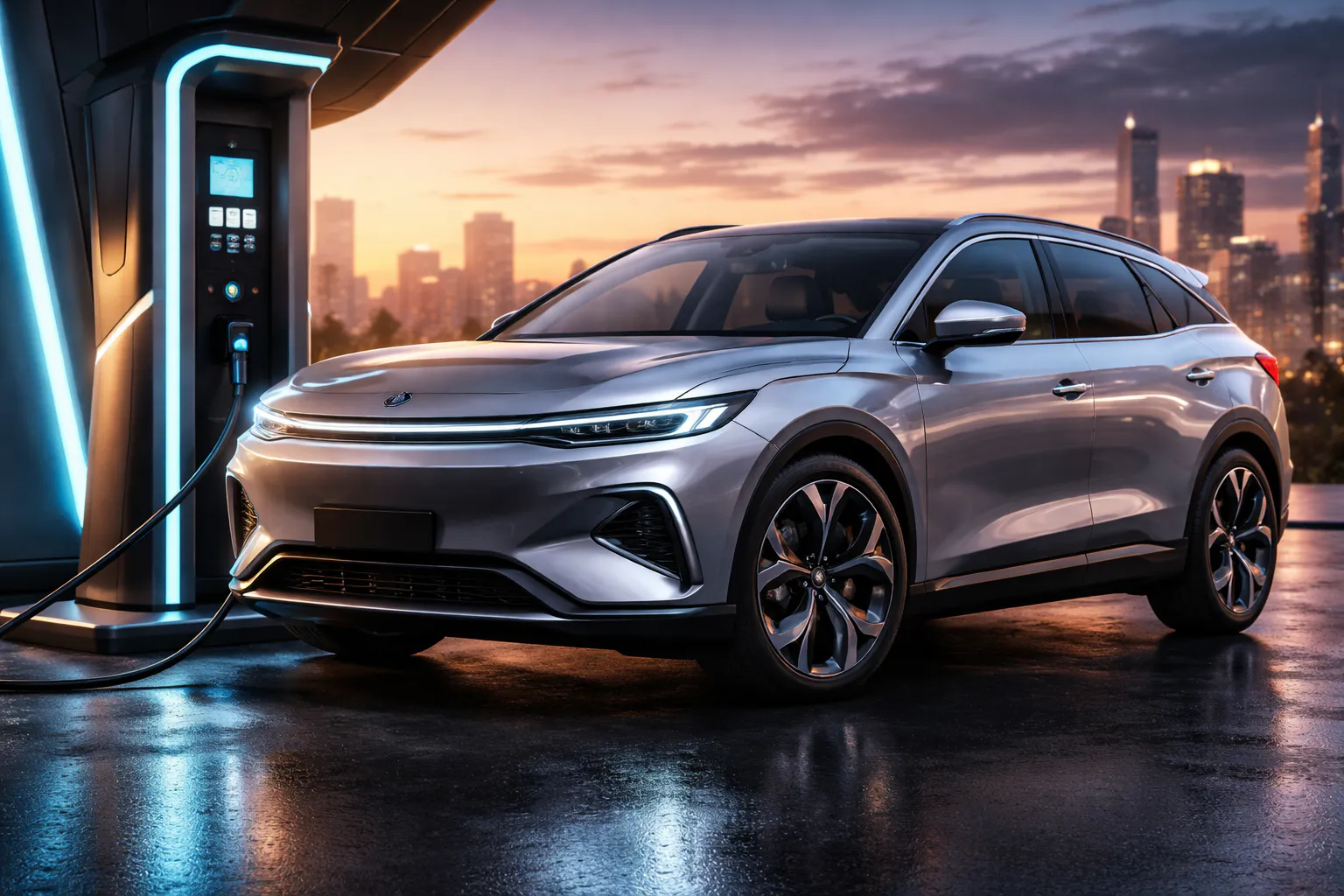
BYD Launches New Electric SUV with “Super Fast” Charging Technology: A Game-Changer in the EV Industry (2026)
The global electric vehicle (EV) market continues to evolve rapidly, and 2026 marks a major breakthrough with the launch of the new BYD Auto Song Ultra EV. This latest electric SUV introduces cutting-edge innovations, including ultra-fast charging technology capable of delivering near-full charge in minutes, long driving range, and advanced smart features.
As competition intensifies among EV manufacturers, BYD’s latest move signals a strong push toward solving one of the biggest challenges in electric mobility: charging time. With the Song Ultra EV, the company is not just launching another electric SUV—it is redefining how quickly and efficiently EVs can be used in everyday life.
Overview of the BYD Song Ultra EV
The BYD Song Ultra EV is a mid-size electric SUV built on BYD’s advanced e-Platform 3.0 architecture. It represents the brand’s latest innovation in battery efficiency, performance, and smart driving technologies.
Key highlights include:
- Vehicle class: Mid-size electric SUV
- Drivetrain: Rear-wheel drive
- Platform: e-Platform 3.0
- Motor power: Up to 362 horsepower
- Battery options: 75.6 kWh and 82.7 kWh Blade Battery
- Range: Up to 710 km (CLTC standard)
The vehicle is designed to compete globally, targeting markets that demand long range, fast charging, and premium technology at competitive pricing.
Breakthrough: Ultra-Fast Charging Technology
One of the most revolutionary aspects of the Song Ultra EV is its “Flash Charging” system, powered by BYD’s second-generation Blade Battery.
Charging Speed That Rivals Refueling
- Charging from 10% to 70% in around 5 minutes
- Charging up to 97% in approximately 9–12 minutes
This level of performance is comparable to the time it takes to refuel a gasoline car, effectively eliminating “range anxiety” and long waiting times.
BYD achieves this through:
- 1,000V high-voltage architecture
- Up to 1.5 MW charging power
- Advanced thermal management systems
- High-rate lithium iron phosphate (LFP) battery chemistry
This innovation positions BYD ahead of many competitors, including traditional automakers and even some premium EV brands.
Next-Generation Blade Battery Technology
At the core of this innovation lies BYD’s second-generation Blade Battery, a significant upgrade over its predecessor.
Key Improvements:
- Higher energy density
- Improved safety standards
- Better performance in extreme temperatures
- Longer lifespan
- Faster charge acceptance
The battery can maintain rapid charging speeds even in cold environments, charging from 20% to 97% in under 12 minutes at -20°C
Unlike many competitors that rely on nickel-based batteries, BYD continues to use LFP (Lithium Iron Phosphate) chemistry, which offers:
- Lower cost
- Higher thermal stability
- Reduced risk of fire
- Longer cycle life
This makes the Song Ultra EV not only fast but also safer and more durable.
Impressive Driving Range: Up to 710 KM
Range remains one of the most critical factors for EV buyers, and BYD delivers strongly in this area.
The Song Ultra EV offers:
- Up to 710 km range (CLTC)
- Alternative variants around 620 km depending on battery size
This puts the vehicle among the top-performing electric SUVs in its class, making it suitable for:
- Long-distance travel
- Daily commuting without frequent charging
- Reduced dependency on charging infrastructure
Such range figures are especially attractive in emerging EV markets where charging networks are still developing.
Performance and Driving Experience
The Song Ultra EV is not just about efficiency—it also delivers strong performance.
Performance Specs:
- Power output: ~362 hp
- Top speed: up to 210 km/h
- Smooth rear-wheel-drive dynamics
- Instant torque delivery
The electric motor provides quick acceleration and a quiet driving experience, while the vehicle’s platform ensures improved stability and handling.
Additionally, the SUV features intelligent suspension systems such as DiSus-C adaptive damping, enhancing ride comfort across different terrains.
Advanced Technology and Interior Features
BYD has equipped the Song Ultra EV with a wide range of smart features, making it a technologically advanced SUV.
Interior Highlights:
- 15.6-inch rotating infotainment screen
- 10.25-inch digital instrument cluster
- Head-up display (HUD) up to 26 inches
- Wireless charging (dual 50W pads)
Smart Driving and Safety:
- LiDAR-based advanced driver assistance system (ADAS)
- 360-degree camera system
- Up to 7 airbags
- Intelligent driving platform with high computing power (300 TOPS)
These features position the Song Ultra EV as a premium yet accessible electric SUV.
Design and Exterior Appeal
The design of the Song Ultra EV reflects BYD’s modern aesthetic language.
Exterior Features:
- Closed front grille (typical EV styling)
- Full-width LED light bars (front and rear)
- Dragon Whisker headlight design
- Aerodynamic 19-inch wheels
The SUV combines sporty and futuristic elements, appealing to both young buyers and families.
Pricing and Market Position
The Song Ultra EV is expected to be competitively priced, especially in the Chinese market.
- Estimated price: around $21,000 – $26,000 equivalent
This aggressive pricing strategy gives BYD a major advantage over competitors, particularly in:
- Emerging markets
- Price-sensitive segments
- First-time EV buyers
BYD’s approach is clear: deliver high-end technology at mass-market prices.
Global Impact and Industry Implications
The launch of the Song Ultra EV is more than just a product release—it signals a shift in the global automotive landscape.
Key Impacts:
- Faster EV Adoption
Ultra-fast charging reduces one of the biggest barriers to EV ownership. - Pressure on Competitors
Automakers like Tesla, Volkswagen, and others must accelerate innovation. - Infrastructure Evolution
BYD plans to expand its flash charging network significantly, with thousands of stations planned - Shift Toward Chinese EV Leadership
China continues to lead in EV technology, manufacturing, and innovation.
Challenges and Considerations
Despite its impressive features, there are still challenges:
- Charging infrastructure outside China may not yet support ultra-fast charging
- Real-world range (WLTP/EPA) may differ from CLTC figures
- Market competition is intensifying globally
However, BYD’s technological edge gives it a strong position moving forward.
Conclusion
The BYD Song Ultra EV (2026) represents a significant leap forward in electric vehicle technology. With its ultra-fast charging capability, long driving range, advanced battery system, and competitive pricing, it sets a new benchmark in the EV industry.
BYD is not only addressing current EV limitations but also shaping the future of mobility. If the company successfully expands its charging infrastructure globally, vehicles like the Song Ultra EV could accelerate the transition away from fossil fuels faster than expected.
For consumers, this means one thing: electric vehicles are no longer just an alternative—they are becoming the new standard.
