
Universities Told They ‘Must Commit to Free Speech’ Under New Government Plan
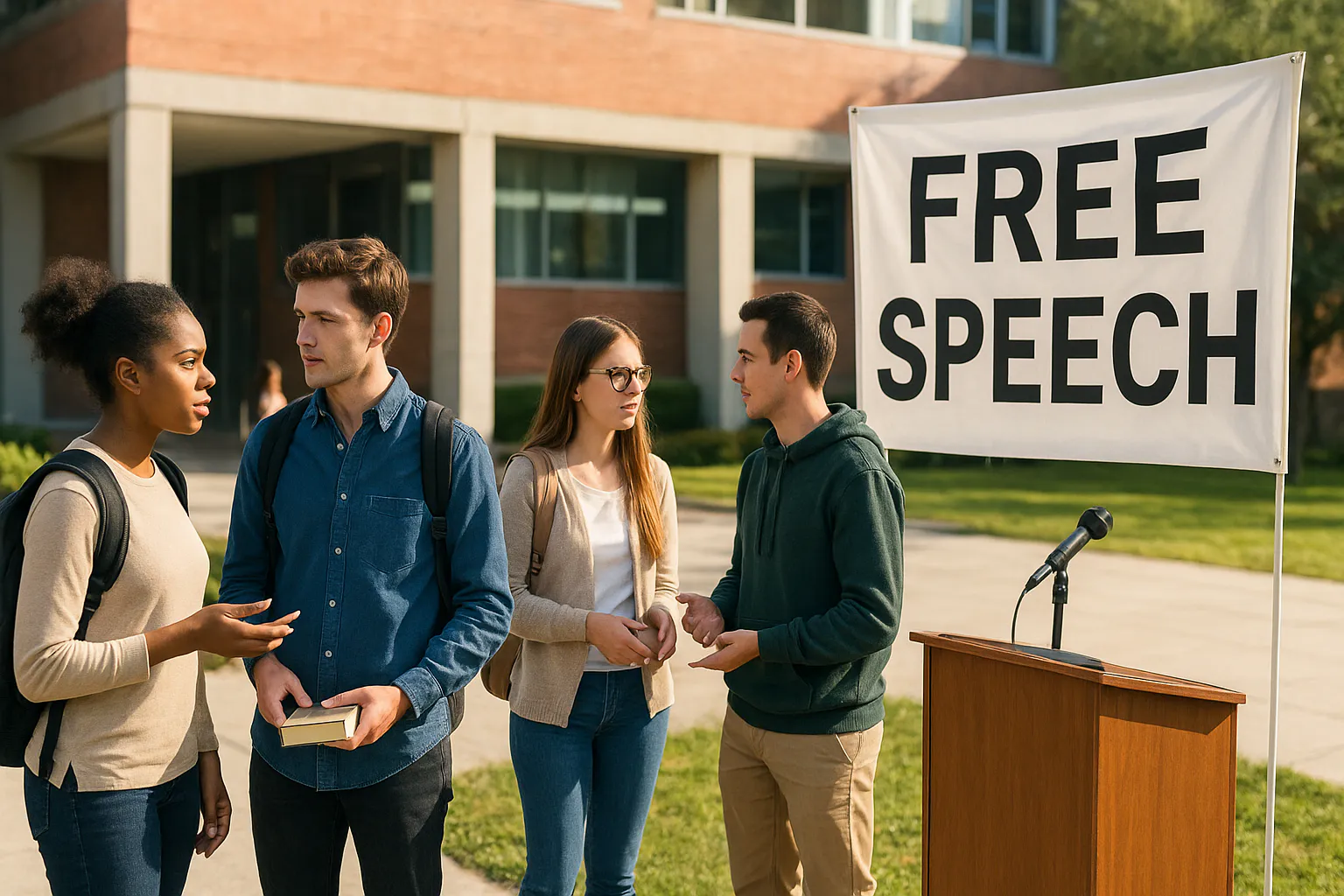
The debate over free speech on university campuses has grown louder in recent years, as academic institutions face increasing pressure to balance open debate, student welfare, and social harmony. In a major policy shift, the government has announced that universities must formally commit to protecting free speech, reinforcing academic freedom and open dialogue as core principles of higher education.
Under the new plans, universities—and student unions—will be held legally accountable for upholding these standards. They will be required to demonstrate they are actively safeguarding free expression, ensuring that students, faculty, visiting speakers, and even controversial viewpoints are not unfairly suppressed.
This move comes amid concerns that campuses have become environments where opposing ideas are silenced rather than debated. Reports of events being cancelled, speakers being “de-platformed,” and students self-censoring their opinions have triggered widespread national discussion. The government argues the new policy is essential to protect democratic values and promote intellectual diversity.
Why the Government Introduced the Policy
Officials say the initiative responds to rising complaints from academics, students, and civil society groups about the erosion of open debate in higher education. Several cases have made headlines in recent years, where lecturers faced disciplinary action for controversial opinions, and student organizations blocked guest speakers due to political or social disagreements.
The government believes universities should be places where complex and sensitive ideas can be exchanged freely, without fear of punishment or social backlash. A spokesperson stated that academic institutions “play a vital role in shaping the next generation of leaders and thinkers,” and must therefore serve as “a sanctuary for open inquiry.”
Alongside the policy, a new Office for Students (OfS) role focused on free speech will monitor compliance and handle complaints. Failure to comply could lead to sanctions, including fines or public reprimands.
What Universities Will Be Required to Do
The policy outlines several responsibilities that universities must fulfill:
- Protect lawful free speech across campuses, including online spaces.
- Create clear policies ensuring students and staff can express diverse viewpoints.
- Prevent no-platforming and unjustified event cancellations.
- Support staff and students who face backlash for lawful speech.
- Allow controversial guest speakers, unless their presence poses legitimate safety concerns.
- Demonstrate compliance through annual reporting and transparency initiatives.
Student unions will also fall under these obligations, meaning they must permit a broad range of political and ideological speakers and avoid discriminatory practices when approving campus events.
Balancing Free Speech and Safety
Critics warn that the policy could conflict with anti-harassment protections and create uncertainty around what constitutes “protected speech.” Some student groups argue that the rules may make vulnerable communities feel unsafe if controversial voices are given platforms.
The government insists that the measures apply only to lawful speech. Hate speech, violent threats, incitement, and discrimination remain prohibited. Universities will still retain the power to restrict events or speakers when legitimate security risks exist, but they must prove those restrictions are necessary and not used as tools for censorship.
Reactions from the Higher Education Sector
University leaders have offered cautious support, acknowledging the importance of free expression while warning that implementation must be practical and clear. Some institutions emphasize that they already have robust free-speech policies, but welcome national consistency.
Academic groups have highlighted concerns about administrative burden and possible conflict between academic judgment and government standards. Meanwhile, student advocates are divided—some fear the rules will allow harmful voices on campus, while others say the policy protects students who currently feel silenced by dominant cultural norms.
A professor of political science commented, “Universities should not become echo chambers. Exposure to different viewpoints is essential to intellectual development. But we must ensure this policy protects dialogue rather than inflames polarization.”
Impact on Students and Campus Culture
For students, the policy could reshape campus life significantly. Universities will be expected to foster environments where debate is encouraged rather than discouraged. This may lead to:
- A broader range of speakers and academic events
- Increased student participation in political and philosophical discussions
- More public debates, forums, and intellectual exchanges
- Increased responsibility on student groups to be inclusive in speaker invitations
At the same time, universities will need to strengthen support systems for students who may feel uncomfortable or targeted by heated debates. Developing respectful, structured spaces for discourse will be essential.
Looking Ahead: A New Era for Academic Freedom
The government’s free-speech mandate signals a shift towards reaffirming the traditional mission of universities: to serve as arenas of intellectual challenge, debate, and discovery. While the transition may not be smooth, supporters hope the policy will reinvigorate open thought in academic settings.
Institutions now face the task of creating policies that are both protective and flexible, promoting constructive discourse rather than conflict. As the plan moves toward full implementation, universities are preparing guidance documents, revising student conduct policies, and training staff on how to navigate sensitive discussions.
Ultimately, the success of this initiative will depend on whether universities can strike a meaningful balance—protecting free speech without allowing harmful behavior, and fostering debate without enabling division. If executed carefully, this could mark a powerful step forward for academic freedom and democratic expression.
