
Tanah Lot Bali Travel Guide: History, Attractions, and Essential Tips for Visiting Bali’s Iconic Sea Temple
Introduction
Located on the southwestern coast of Bali, Tanah Lot Temple is one of the island’s most iconic and photographed landmarks. Perched dramatically on a rock formation surrounded by crashing waves, Tanah Lot offers a mesmerizing blend of natural beauty, spiritual significance, and cultural heritage.
For travelers seeking an unforgettable Bali experience, Tanah Lot is more than just a tourist destination—it is a sacred site deeply rooted in Balinese Hindu tradition. This comprehensive guide explores the history, attractions, travel tips, and everything you need to know before visiting Tanah Lot in Tabanan, Bali.
The History of Tanah Lot
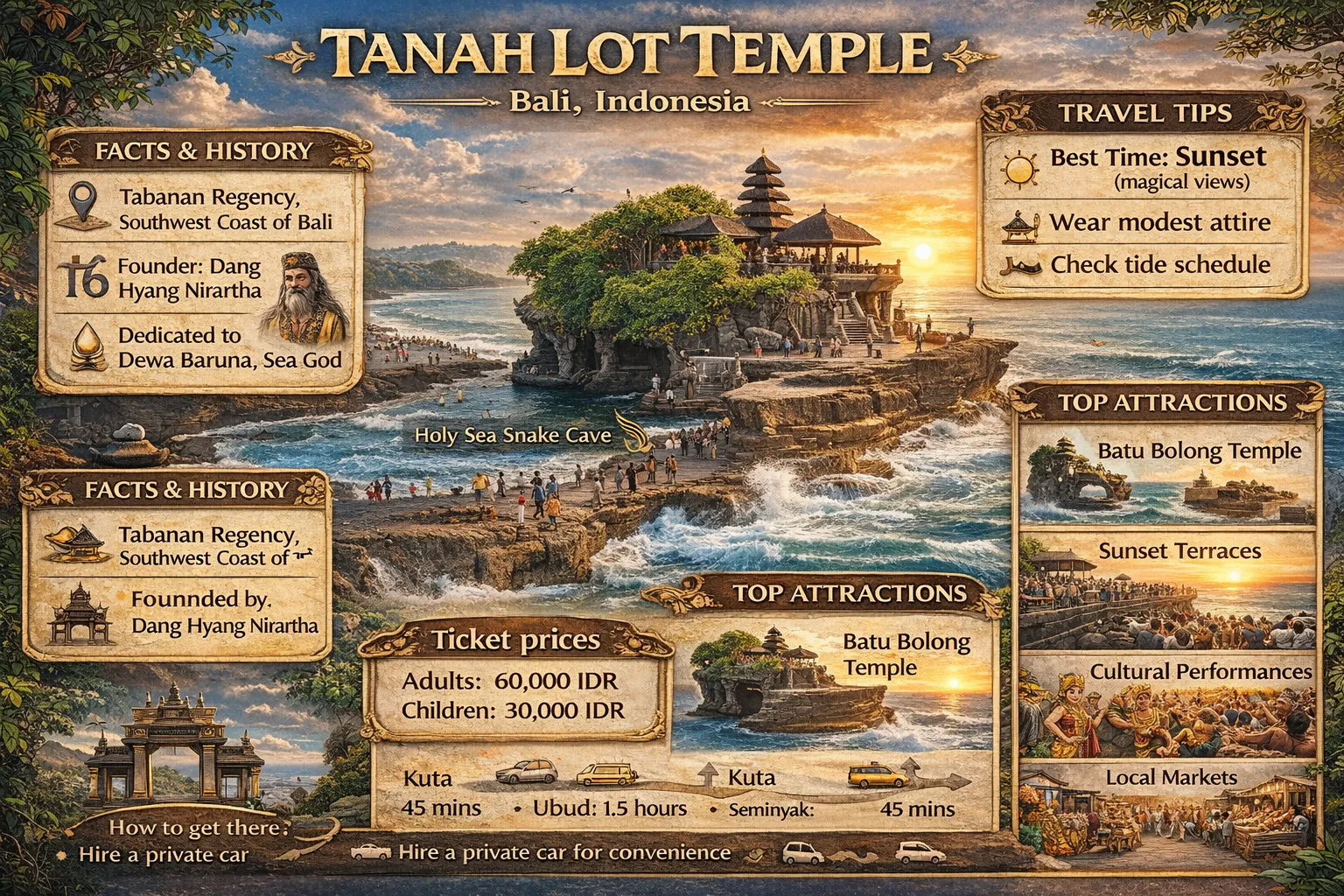
The name “Tanah Lot” translates to “Land in the Sea,” perfectly describing its unique location. The temple is believed to have been established in the 16th century by the revered Hindu priest Dang Hyang Nirartha, who played a crucial role in spreading Hinduism across Bali.
According to local legend, Nirartha traveled along Bali’s coast and was captivated by the beauty of this rocky outcrop. He decided it was a sacred place suitable for worship and meditation. Despite resistance from local villagers, Nirartha demonstrated his spiritual power and convinced them to honor the site as a temple.
Today, Tanah Lot is one of Bali’s most important sea temples, forming part of a chain of coastal temples designed to protect the island from evil spirits.
Unique Architecture and Setting
What makes Tanah Lot truly extraordinary is its location. The temple sits atop a large offshore rock that becomes completely surrounded by water during high tide. This creates a stunning visual effect, making it appear as if the temple is floating in the ocean.
Key architectural highlights:
- Traditional Balinese temple structure
- Black volcanic rock foundation
- Sacred shrines dedicated to sea deities
- Natural sea cave beneath the temple
At low tide, visitors can walk across the sandy pathway to reach the base of the temple. However, access to the main temple area is restricted to worshippers only.
Spiritual Significance
Tanah Lot is not just a scenic spot—it is a deeply spiritual place for the Balinese people. The temple is dedicated to the sea gods and plays a vital role in local religious ceremonies.
One of the most unique aspects of Tanah Lot is the presence of holy sea snakes, believed to guard the temple from negative forces. These snakes are considered sacred and are often shown to visitors near the cave.
The temple is also part of Bali’s “Sad Kahyangan” temples, which are key spiritual pillars of the island.
Best Time to Visit Tanah Lot
Timing your visit can significantly enhance your experience.
🌅 Sunset – The Most Popular Time
Tanah Lot is world-famous for its breathtaking sunsets. As the sun dips below the horizon, the temple is silhouetted against vibrant hues of orange and gold, creating a magical atmosphere.
🌤️ Morning – Peaceful and Less Crowded
Visiting in the morning offers a quieter experience, ideal for photography and exploration without large crowds.
🌊 Tide Considerations
- Low tide: You can walk closer to the temple
- High tide: The temple appears to float, perfect for photos
Top Attractions Around Tanah Lot
While the temple itself is the main highlight, the surrounding area offers plenty to explore.
1. Batu Bolong Temple
Located nearby, this temple sits on a rock arch formation and provides another stunning ocean view.
2. Sunset Terraces
Enjoy panoramic views of the ocean while relaxing at nearby cafes and restaurants.
3. Cultural Performances
Traditional Balinese dance performances are often held in the area, especially during peak tourist seasons.
4. Local Markets
The entrance area features a vibrant market selling:
- Souvenirs
- Handicrafts
- Balinese clothing
- Local snacks
How to Get to Tanah Lot
Tanah Lot is located in Tabanan Regency, about 20 kilometers from popular tourist areas.
From Kuta:
- Travel time: حوالي 45 minutes
- Best option: Private car or taxi
From Ubud:
- Travel time: sekitar 1.5 hours
From Seminyak:
- Travel time: around 45–60 minutes
Hiring a driver for a day is highly recommended for convenience.
Entrance Fee and Opening Hours
🎟️ Entrance Fee (approximate):
- Adults: IDR 60,000
- Children: IDR 30,000
🕒 Opening Hours:
- Daily: 07:00 AM – 07:00 PM
Prices may vary slightly depending on the season.
Travel Tips for Visiting Tanah Lot
To make the most of your visit, keep these tips in mind:
✔ Arrive Early or Late
Avoid midday crowds by visiting early morning or during sunset.
✔ Wear Comfortable Shoes
The area involves walking on uneven surfaces and rocky paths.
✔ Respect Local Customs
As a sacred site, dress modestly and follow temple rules.
✔ Stay Hydrated
Bali’s tropical climate can be quite hot and humid.
✔ Bring a Camera
Tanah Lot is one of the most photogenic spots in Bali.
Why Tanah Lot is a Must-Visit Destination
Tanah Lot stands out as one of Bali’s most unique attractions because it combines:
- Natural beauty
- Cultural heritage
- Spiritual significance
- Stunning photography opportunities
Whether you are a nature lover, photographer, or cultural enthusiast, Tanah Lot offers an experience that is both enriching and unforgettable.
Environmental and Cultural Preservation
Due to erosion, the rock supporting Tanah Lot has undergone restoration efforts funded by the Japanese government. These efforts ensure the temple remains stable and preserved for future generations.
Visitors are encouraged to:
- Avoid littering
- Respect sacred areas
- Support local businesses
Conclusion
A visit to Tanah Lot Temple is an essential part of any Bali itinerary. Its dramatic ocean setting, rich history, and spiritual aura make it one of the most captivating destinations on the island.
From witnessing a magical sunset to exploring nearby cultural sites, Tanah Lot offers a complete travel experience that leaves a lasting impression.
If you’re planning a trip to Bali, don’t miss the opportunity to explore this iconic sea temple—it’s a destination that truly captures the soul of the island.
