
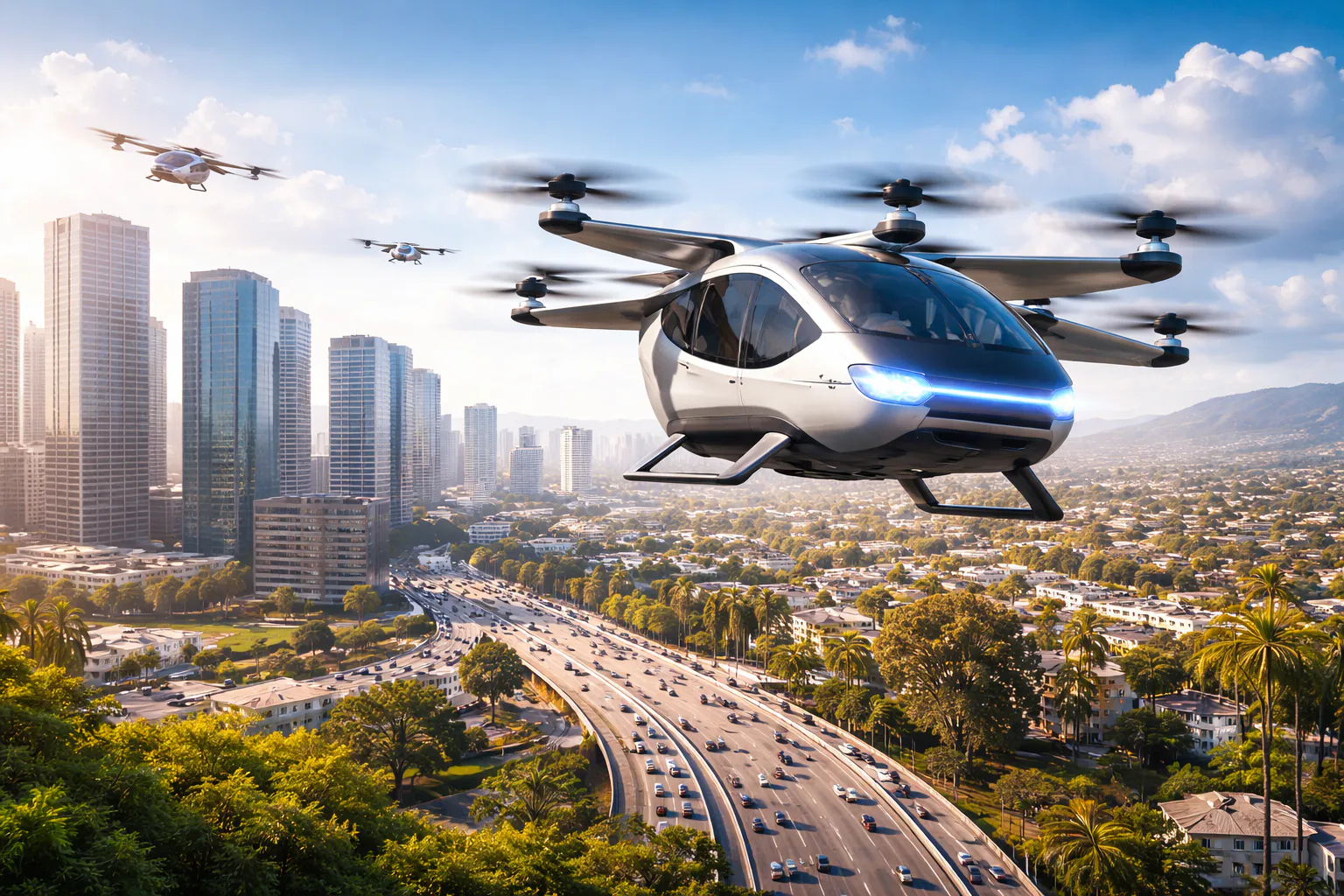
Flying Cars Are Here: How Silicon Valley Is Turning Sci-Fi Into Reality
Introduction
For decades, flying cars have been a symbol of futuristic imagination, often associated with science fiction movies and ambitious predictions. Today, that vision is rapidly becoming reality. In the heart of innovation, Silicon Valley is leading a technological revolution aimed at transforming urban transportation through flying cars, also known as electric vertical takeoff and landing (eVTOL) aircraft.
With major investments, cutting-edge engineering, and growing demand for faster mobility, the dream of flying cars is no longer confined to fantasy—it is on the verge of reshaping how people travel.
The Rise of Flying Car Technology
Flying cars are not traditional vehicles with wings; they are sophisticated aircraft powered by electric propulsion systems. These vehicles can take off and land vertically, eliminating the need for long runways. Companies in Silicon Valley are leveraging advancements in battery technology, artificial intelligence, and lightweight materials to make eVTOL aircraft efficient and practical.
Unlike helicopters, flying cars are designed to be quieter, safer, and more environmentally friendly. This makes them suitable for urban environments where noise and emissions are major concerns.
Key Players Driving Innovation
Several companies are at the forefront of this technological shift. Joby Aviation has developed an all-electric aircraft capable of carrying passengers across cities at high speeds. Backed by major investors, the company aims to launch commercial air taxi services within the next few years.
Another major player, Archer Aviation, is focused on building scalable urban air mobility solutions. Its aircraft are designed for short-distance travel, reducing commute times significantly.
Meanwhile, Wisk Aero is working on fully autonomous flying vehicles, eliminating the need for a human pilot and pushing the boundaries of innovation even further.
How Flying Cars Will Change Urban Mobility
One of the biggest advantages of flying cars is their ability to bypass traffic congestion. In densely populated cities, commuting can take hours. Flying cars promise to reduce travel times dramatically by using airspace instead of crowded roads.
Imagine a 90-minute drive reduced to just 15 minutes. This level of efficiency could transform daily life, making it easier for people to live farther from city centers without sacrificing convenience.
Additionally, flying cars could improve emergency response times, support medical transport, and enhance logistics by enabling faster delivery of goods.
Challenges Facing the Industry
Despite the excitement, several challenges remain. Regulatory approval is one of the biggest hurdles. Aviation authorities must ensure that flying cars meet strict safety standards before they can operate commercially.
Infrastructure is another critical issue. Cities will need to build “vertiports” for takeoff and landing, as well as integrate air traffic management systems to prevent collisions.
Battery limitations also pose a challenge. While technology is improving, current batteries still restrict flight range and duration. However, ongoing research is expected to overcome these limitations in the near future.
Environmental Impact
Flying cars are often promoted as a sustainable alternative to traditional transportation. Since most eVTOL aircraft are electric, they produce zero direct emissions. This aligns with global efforts to reduce carbon footprints and combat climate change.
However, the overall environmental impact depends on how electricity is generated. If powered by renewable energy, flying cars could significantly reduce pollution. Otherwise, their benefits may be limited.
When Will Flying Cars Become Mainstream?
Experts predict that flying cars will begin commercial operations within the next decade. Initial services will likely be limited to premium air taxis in major cities. Over time, as technology becomes more affordable, flying cars could become accessible to a wider audience.
Silicon Valley continues to play a central role in accelerating this timeline, attracting talent, funding, and innovation from around the world.
The Future of Transportation
The development of flying cars marks a significant turning point in transportation history. Just as automobiles once revolutionized mobility, eVTOL aircraft have the potential to redefine how people move within and between cities.
This shift will not happen overnight, but the progress made so far indicates that the future is closer than many expected.
Conclusion
The idea of flying cars is no longer a distant dream—it is becoming a tangible reality driven by innovation in Silicon Valley. With companies like Joby Aviation, Archer Aviation, and Wisk Aero leading the way, the world is witnessing the birth of a new era in transportation.
While challenges remain, the potential benefits—faster travel, reduced congestion, and cleaner energy—make flying cars one of the most exciting developments of our time. As technology continues to evolve, the skies above our cities may soon become the highways of the future.

1 comment
Tes pesan, apakah masih normal