
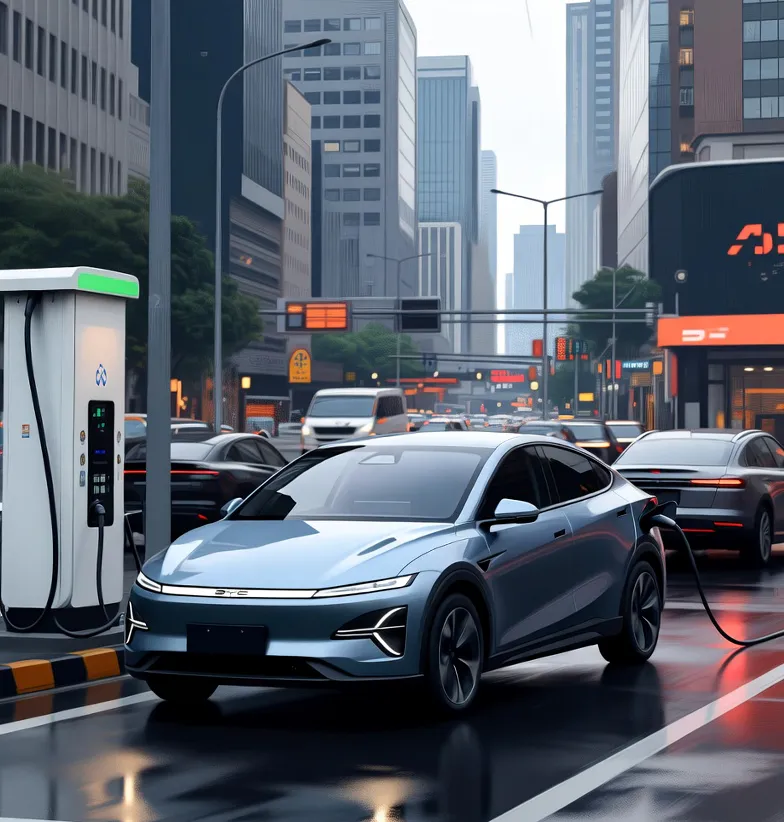
BYD’s Growing Dominance in Indonesia’s Electric Vehicle Market
The electric vehicle (EV) landscape in Indonesia has transformed rapidly in just a few years, and one name now stands at the center of that transformation: BYD. Once considered a newcomer in the Indonesian automotive arena, the Chinese EV giant now leads several segments of the nation’s increasingly competitive electric mobility sector. With aggressive pricing, strong brand presence, and a consistent flow of new models, BYD has captured consumer interest and reshaped the market dynamic in 2025.
In this comprehensive analysis, we explore how BYD managed to dominate the Indonesian EV market, what factors contributed to its rise, and what this means for the broader automotive industry in Southeast Asia.
BYD’s Early Momentum: A Rapid Market Entry Strategy
BYD entered Indonesia with clear intent: to capture market share quickly through a combination of technology leadership and consumer-focused pricing. While established manufacturers were still refining their EV offerings, BYD launched multiple models across different price brackets, giving Indonesian buyers choices that fit their budget and usage needs.
Models such as the BYD Dolphin, Atto 3, and Seal gained immediate traction because they offered high driving ranges, modern interiors, and competitive pricing when compared to both EV and gasoline-powered rivals. Within months, BYD’s presence became visible across major cities—supported by aggressive dealership expansion, test-drive events, and high-frequency promotional campaigns.
This early push proved crucial. BYD was no longer an alternative brand; it became a mainstream option.
Leadership in Sales: Surpassing Japanese and Korean Automakers
By 2025, BYD’s sales numbers in Indonesia repeatedly topped monthly EV charts, and in some months, the brand even surpassed long-established manufacturers such as Honda, Mitsubishi, and Toyota in total vehicle sales (including non-EV categories).
The biggest milestones include:
- Entering the top three best-selling car brands in Indonesia across all segments in late 2025.
- Achieving strong cumulative sales that exceeded projections for the first half of the year.
- Dominating the full-electric (BEV) category with a significant lead over regional competitors.
This dominance is partly due to BYD’s ability to maintain production and supply consistency despite global chip shortages. While other brands struggled with long waiting lists, BYD ensured availability—giving them a critical competitive advantage.
Why Indonesian Consumers Choose BYD
1. Long Driving Range and Battery Technology
BYD’s Blade Battery technology is one of the most advanced in the global EV market, offering:
- long lifecycle,
- high safety levels,
- fast charging capability, and
- stable performance in tropical climates.
Indonesian consumers, concerned about battery durability and heat, found BYD’s track record reassuring.
2. Competitive Pricing
BYD benefited from China’s massive EV production capabilities, allowing it to offer vehicles at price points that undercut Korean, Japanese, and even internal combustion competitors. Models like the Dolphin and Atto 3 are priced strategically to attract first-time EV buyers.
3. Feature-Rich Design
Modern interiors, large infotainment screens, ADAS safety systems, and futuristic cabin layouts give BYD’s vehicles an edge in perceived value. At similar price points, few competitors offer the same level of equipment.
4. Strong Local Infrastructure Support
BYD partnered with multiple charging network providers and expanded its own charging ecosystem. This infrastructure-building strategy increased public trust and reduced range anxiety.
Government Support and Policy Tailwinds
Indonesia’s push toward electrification—part of its 2030 emissions reduction roadmap—played a massive role in accelerating BYD’s growth. Government incentives such as VAT reductions, lower registration fees, and import tariff adjustments made EVs increasingly accessible.
BYD’s vehicles consistently met or exceeded the requirements for these incentives:
- high local content (for models assembled domestically or partially localized),
- affordable price segmentation,
- compliance with safety and energy efficiency standards.
As Indonesia continues its transition toward local battery production and EV manufacturing, BYD is in a prime position to take advantage of the ecosystem—especially with its global expertise in battery and EV production.
Expansion of BYD Dealerships and Service Centers
One of the biggest concerns Indonesian buyers had about early EV adoption was after-sales support. BYD addressed this with an aggressive infrastructure strategy:
- Multiple BYD Experience Centers in Jakarta, Surabaya, Bandung, and Bali
- Authorized service networks expanding across key cities
- Partnerships with local automotive groups for rapid scaling
These facilities not only offer servicing but also act as education hubs where visitors can learn about EV technology, charging behavior, and BYD battery safety.
This strong on-ground presence reassures consumers that BYD is not a “temporary” brand—it is here to stay.
Competition Intensifies, But BYD Stays Ahead
The Indonesian EV market is more crowded than ever. Hyundai, Wuling, Neta, Chery, and Japanese manufacturers continue to introduce new models. However, BYD maintains a lead due to its early advantage and wide product lineup.
Hyundai’s Ioniq 5 and Wuling’s Air EV remain strong competitors, but BYD’s broader price range and consistent model updates make it difficult for competitors to keep pace.
Furthermore, BYD’s global dominance—being one of the world’s top EV manufacturers—helps cement its position through scale advantages and technological maturity.
Impact on the Indonesian Automotive Industry
BYD’s rapid growth has forced the entire industry to accelerate innovation. Some key impacts include:
- Pricing pressure: Competitors must reduce prices or increase features to stay competitive.
- Acceleration of EV adoption: More consumers become aware of EV affordability and reliability.
- Improvement in charging infrastructure: Charging operators expand faster to meet rising demand.
- Stimulus for domestic EV manufacturing: Indonesia’s ambition to become a regional EV hub gains traction.
BYD’s success is not just a commercial achievement but a catalyst for nationwide transformation.
Future Outlook: Will BYD Maintain Its Dominance?
Based on current market conditions, BYD’s leadership seems poised to continue through 2026 and beyond. The company plans to:
- Expand local assembly operations
- Introduce more affordable EV models
- Increase after-sales coverage
- Strengthen battery ecosystem partnerships
- Support Indonesia’s EV infrastructure initiatives
As long as BYD continues to innovate and maintain competitive pricing, its influence in the Indonesian market will remain significant.
Conclusion
BYD’s dominance in Indonesia’s electric vehicle market is the result of a well-calibrated combination of advanced technology, aggressive pricing, widespread availability, and precise timing. Its rise has reshaped consumer perception of EVs and accelerated the nation’s shift toward sustainable mobility.
With Indonesia aiming to become a major EV manufacturing hub in Southeast Asia, BYD is well-positioned not only as a market leader but as a long-term partner in the country’s electrification journey.
📚 References :
- BYD Company. (2024). Annual report: Global electric vehicle performance and strategic development. BYD Press.
- Gaikindo. (2025). Indonesia automotive industry sales report 2025. Gabungan Industri Kendaraan Bermotor Indonesia.
- Indonesia Ministry of Industry. (2024). EV ecosystem roadmap and national electrification targets. Ministry of Industry Publications.
- Indonesia Ministry of Transportation. (2024). National electric mobility adoption guidelines. Directorate General of Land Transportation.
- International Energy Agency. (2024). Global EV outlook: Southeast Asia electric vehicle market analysis. IEA Publications.
- Liu, X. (2023). Battery innovation and competitive strategies in China’s EV market. Asia Pacific Mobility Journal, 12(3), 45–62.
- Nugroho, A. (2025). Adoption of electric vehicles in Indonesia: Market drivers and consumer behavior. Journal of Sustainable Transport, 8(1), 15–29.
- Susanto, D., & Hartono, R. (2024). Technological competitiveness of Chinese EV brands in ASEAN. Automotive Studies Review, 19(2), 67–84.
- Wang, L. (2024). Competitive landscape of global EV manufacturers and the rise of BYD. International Journal of Automotive Strategy, 6(4), 102–119.
- Zhang, Y. (2024). Blade battery innovation and its influence on global EV safety standards. Energy Storage Technology Review, 3(2), 88–104.
