
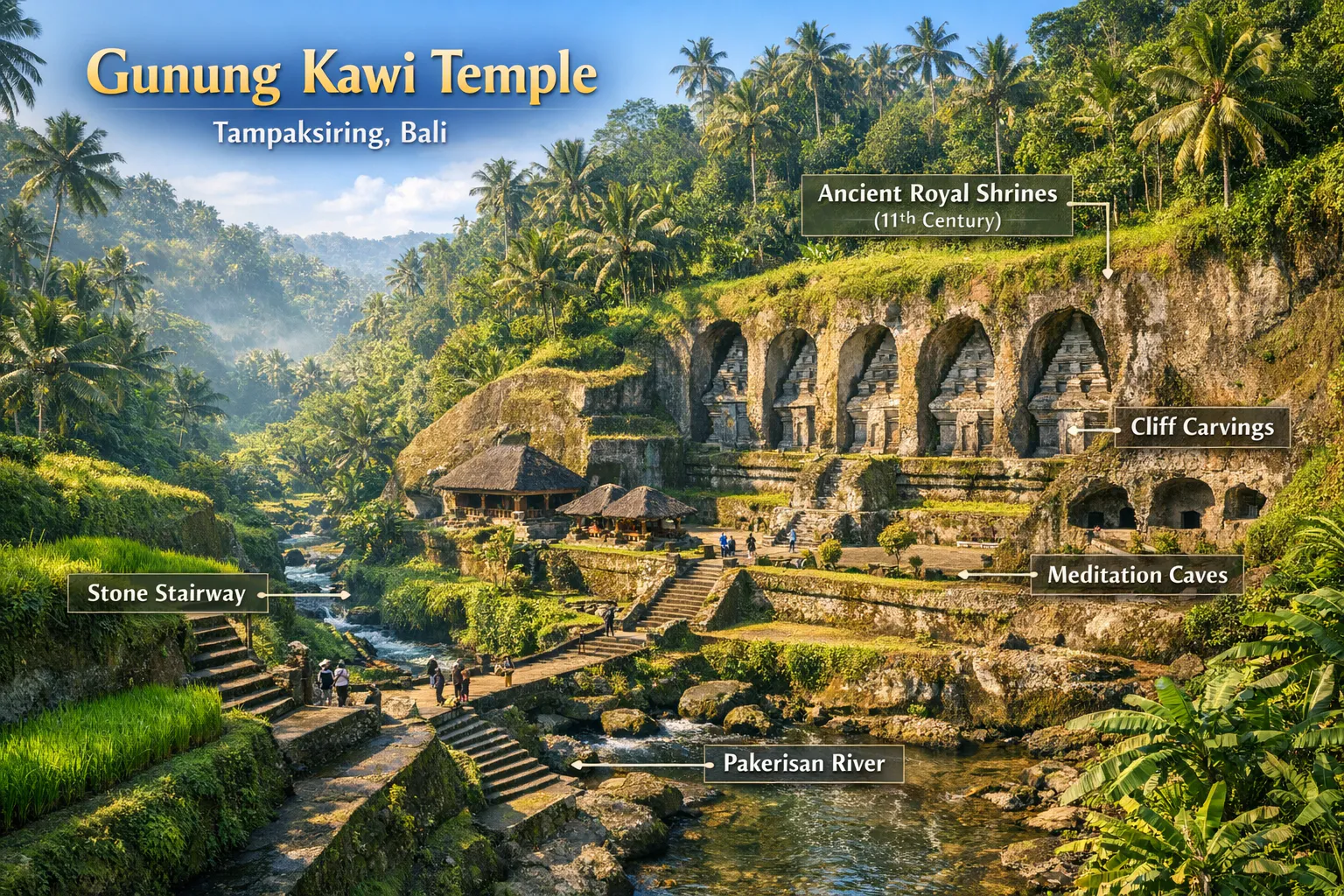
Gunung Kawi Temple: The Ancient Royal Shrine Hidden in Bali’s Sacred Valley
Nestled in the lush river valley of Tampaksiring, Gunung Kawi Temple stands as one of the most fascinating and mysterious archaeological sites in Bali. Known for its monumental rock-cut shrines carved directly into towering cliffs, this 11th-century complex offers a rare glimpse into Bali’s royal past, blending spirituality, architecture, and nature into a breathtaking destination.
Often referred to as the “Valley of the Kings,” Gunung Kawi is not just a tourist attraction—it is a sacred site deeply rooted in Balinese Hindu culture and ancient royal history. For travelers seeking more than beaches and sunsets, this temple offers a journey back in time.
1. Historical Background of Gunung Kawi
Gunung Kawi dates back to the 11th century, making it one of the oldest temple complexes in Bali. It is believed to have been constructed during the reign of King Udayana from the Warmadewa dynasty and later associated with his son, Anak Wungsu.
The temple complex consists of 10 monumental shrines (candi) carved into the cliffs, each standing approximately 7 meters high. These structures are thought to serve as memorials for royal family members, including kings and queens of ancient Bali.
Historians believe:
- Five shrines on the eastern side are dedicated to royal figures such as King Udayana and his descendants
- Four shrines on the western side may honor queens or concubines
- One additional shrine stands isolated nearby
The site’s inscriptions, including the phrase “Haji Lumahing Jalu”, confirm its royal significance, roughly translating to “the king was enshrined here.”
2. Unique Architecture: A Masterpiece Carved in Stone
Unlike most Balinese temples, Gunung Kawi is not built with bricks or stones—it is carved directly into a cliff face along the sacred Pakerisan River.
Key architectural highlights:
- Rock-cut shrines (candi) resembling traditional temple towers
- Cliff carvings reaching heights of over 7 meters
- Hidden niches and meditation chambers
- Ancient inscriptions in Old Javanese script
This architectural style is rare in Bali but shares similarities with ancient Javanese temples.
The site also includes:
- Hermitage caves for meditation
- Monastic-style living quarters
- Sacred bathing areas fed by natural springs
The combination of natural landscape and human craftsmanship makes Gunung Kawi one of Bali’s most visually striking heritage sites.
3. Spiritual and Cultural Significance
Gunung Kawi is not merely a historical relic—it remains an active place of worship for Balinese Hindus.
The temple embodies:
- Ancestor worship traditions
- Royal deification rituals
- Sacred water purification practices
The nearby river is considered holy, and its waters are still used in religious ceremonies today.
In Balinese belief, the temple also serves as a spiritual training ground, where monks and devotees once meditated and sought enlightenment.
4. Myth and Legend: The Story of Kebo Iwa
Like many ancient sites in Bali, Gunung Kawi is surrounded by mystical legends.
One of the most famous stories involves Kebo Iwa, a legendary giant warrior. According to folklore:
- Kebo Iwa carved the entire temple complex with his fingernails in a single night
- His supernatural strength explains the massive cliff carvings
While historians attribute the site to royal construction, this legend adds a mystical layer that continues to attract visitors and storytellers alike.
5. Location and Natural Setting
Gunung Kawi is located in a serene valley surrounded by:
- Rice terraces
- Tropical forests
- Flowing rivers
The temple lies about:
- 30 minutes from Ubud
- 1–1.5 hours from Denpasar
Visitors must descend over 270–300 stone steps to reach the temple, passing through scenic rice fields and traditional villages.
This journey is part of the experience, offering breathtaking views and a sense of adventure.
6. What to Expect When Visiting Gunung Kawi
Entrance and Dress Code
Visitors are required to:
- Wear a sarong and sash (usually provided at the entrance)
- Respect temple etiquette
Things to See
- Cliff-carved royal shrines
- Ancient inscriptions
- Meditation caves
- Sacred bathing pools
- Lush river valley scenery
Best Time to Visit
- Early morning for fewer crowds
- Late afternoon for softer lighting
Duration
Most visitors spend:
- 1–2 hours exploring the complex
7. Why Gunung Kawi Is Unique Compared to Other Bali Temples
Unlike popular temples such as:
- Tirta Empul Temple
- Besakih Temple
Gunung Kawi offers:
- A quieter atmosphere
- Deep historical context
- Rare rock-cut architecture
It is one of the few places in Bali where visitors can truly experience ancient royal heritage combined with untouched natural beauty.
8. Travel Tips for Visiting Gunung Kawi
Essential Tips
- Wear comfortable shoes (many stairs)
- Bring water
- Prepare for humid conditions
- Respect local customs
Photography Tips
- Morning light enhances cliff carvings
- Use wide-angle shots to capture the valley
- Capture reflections near the river
Nearby Attractions
Combine your visit with:
- Tirta Empul (holy water temple)
- Tegallalang rice terraces
- Ubud cultural center
9. Hidden Facts About Gunung Kawi
- The temple is often called Bali’s “Valley of the Kings”
- It contains one of the largest ancient temple complexes in Bali
- Some chambers may have been used for meditation or acoustic rituals
- The site was integrated into modern Balinese Hindu practices centuries later
10. SEO Summary (Optimized Conclusion)
Gunung Kawi Temple in Tampaksiring, Bali, is a must-visit destination for travelers seeking history, spirituality, and natural beauty. With its 11th-century origins, royal heritage, and unique cliff-carved shrines, it stands as one of the most extraordinary archaeological sites in Indonesia.
Whether you are a history enthusiast, cultural explorer, or photographer, Gunung Kawi offers an unforgettable journey into Bali’s ancient past
