
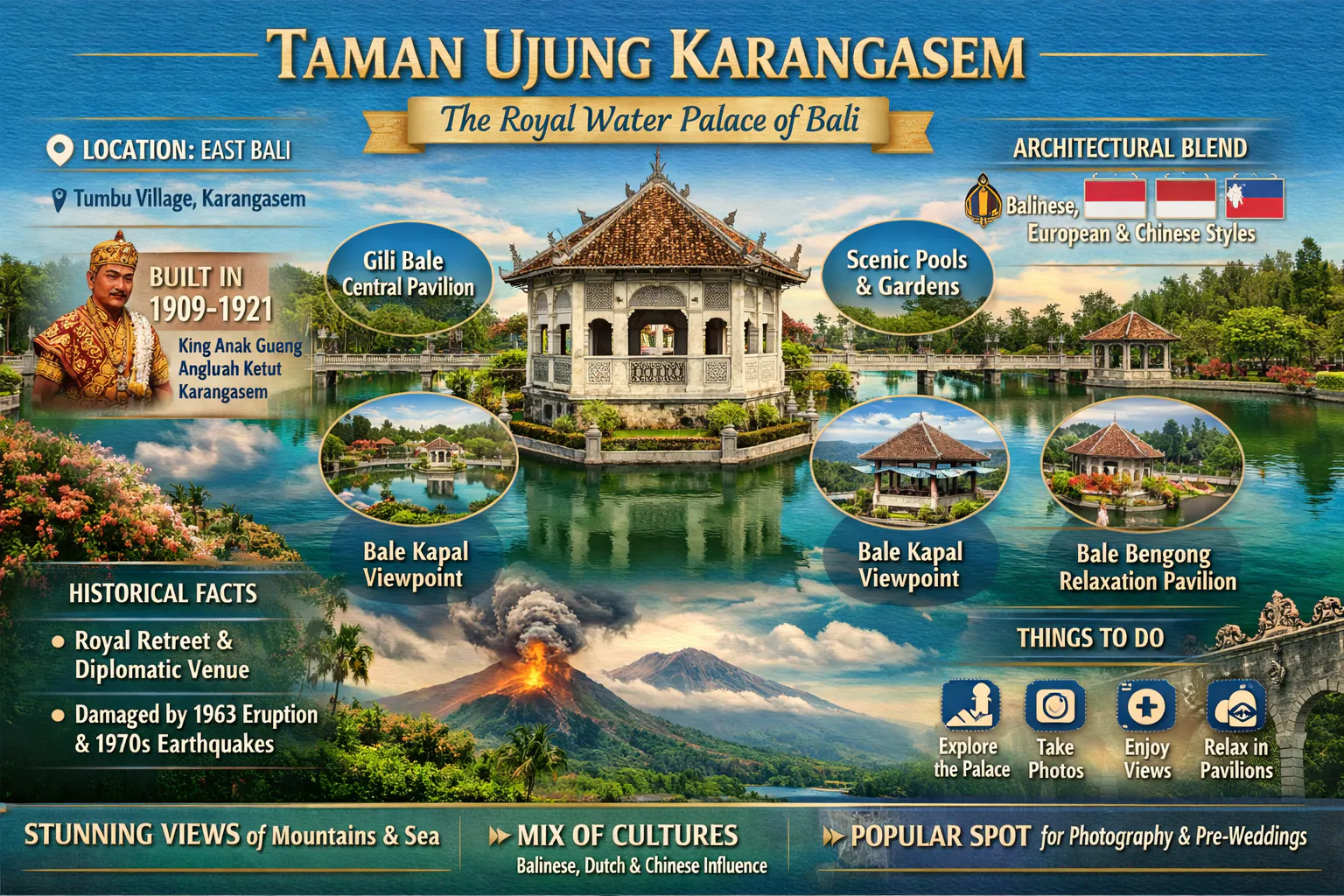
Taman Ujung Karangasem: A Complete Guide to Bali’s Historic Water Palace
Nestled in the eastern region of Bali, Taman Ujung Karangasem stands as one of the island’s most enchanting historical landmarks. Often referred to as the Ujung Water Palace, this magnificent complex is more than just a tourist attraction—it is a symbol of royal legacy, cultural fusion, and architectural brilliance.
Located in Karangasem Regency, approximately 80 kilometers from Denpasar, Taman Ujung offers visitors a serene escape filled with expansive pools, elegant bridges, and panoramic views of mountains and sea. Unlike Bali’s more crowded destinations, this historical site provides a peaceful atmosphere enriched with deep historical significance.
This article explores the history, architecture, cultural importance, and travel experience of Taman Ujung Karangasem based on reliable historical sources and verified data.
The Historical Origins of Taman Ujung
The history of Taman Ujung dates back to the early 20th century during the reign of the Karangasem Kingdom. The site was originally known as Kolam Dirah, a place associated with spiritual rituals and, according to historical records, used for punishing practitioners of black magic.
The transformation of this site into a royal water palace began in 1909 under the rule of King I Gusti Bagus Jelantik, also known as Anak Agung Anglurah Ketut Karangasem. The king envisioned a grand resting place that would serve not only as a retreat for the royal family but also as a venue to welcome distinguished guests.
Construction involved a collaboration between local Balinese craftsmen and international architects, including Dutch architect van Den Hentz and Chinese architect Loto Ang. This cross-cultural partnership resulted in a unique architectural masterpiece.
The palace complex was completed around 1921, marking the beginning of its role as a royal leisure destination and ceremonial site.
A Royal Retreat and Diplomatic Venue
Taman Ujung was not merely a garden; it functioned as an important royal facility. The Karangasem king used the palace as a place of relaxation, meditation, and diplomacy. Historical records indicate that foreign dignitaries—including royalty and colonial officials—were received at this elegant complex.
The presence of wide ponds, open pavilions, and scenic viewpoints made it an ideal location for royal gatherings and ceremonies. The main building, known as Gili Bale, was positioned in the center of a large pool, connected by bridges—symbolizing both physical and philosophical balance.
This strategic design reflected the king’s intention to create a harmonious environment where nature, culture, and politics intersected.
Architectural Uniqueness: A Fusion of Cultures
One of the most remarkable aspects of Taman Ujung Karangasem is its architectural diversity. The complex is a harmonious blend of Balinese, European, Chinese, and even Middle Eastern influences.
Balinese Elements
Traditional Balinese design is evident in the intricate carvings, mythological motifs, and spiritual symbolism found throughout the complex. These elements reflect local beliefs and artistic traditions.
European Influence
Dutch colonial architecture is visible in the use of concrete structures, symmetrical layouts, and the white façade of buildings. The adoption of modern construction techniques, such as casting and molding, was considered advanced for its time.
Chinese and Eastern Features
Chinese influence appears in certain structures such as the Bale Bengong (circular pavilion) and ornamental details. The integration of multiple cultural styles demonstrates the openness of the Karangasem kingdom to global influences.
This fusion of styles makes Taman Ujung a rare example of cross-cultural architecture in Indonesia.
The Layout and Main Structures
Taman Ujung spans approximately 10 hectares and consists of several key structures surrounded by large pools and landscaped gardens.
1. The Main Pools
The complex features three large interconnected pools, creating a tranquil water-based landscape. These pools serve both aesthetic and symbolic purposes, representing balance and purity.
2. Gili Bale (Central Pavilion)
Located in the middle of the main pool, this structure acts as the centerpiece of the complex. Visitors can access it via elegant bridges, making it one of the most photographed spots in the area.
3. Bale Kapal
Situated on higher ground, Bale Kapal offers panoramic views of the entire complex, including the coastline and surrounding hills. It requires visitors to climb a series of steps, rewarding them with breathtaking scenery.
4. Bale Bengong
This circular pavilion provides a relaxing spot to enjoy the surrounding beauty. Its elevated position allows visitors to observe the entire landscape.
5. Gates and Bridges
The site includes multiple gates and bridges connecting different sections, enhancing both functionality and aesthetic appeal.
Symbolism and Cosmological Meaning
Beyond its physical beauty, Taman Ujung carries deep spiritual and cosmological significance. The layout reflects the Balinese concept of harmony between humans, nature, and the divine.
The palace is strategically positioned between Mount Agung, Mount Lempuyang, and the Lombok Strait. This alignment symbolizes the balance between mountains (representing the spiritual realm) and the sea (representing the physical world).
Such symbolism is rooted in Balinese Hindu philosophy, emphasizing the interconnectedness of all elements of life.
Destruction and Restoration
Like many historical sites in Bali, Taman Ujung has faced significant challenges over time. The complex suffered severe damage due to natural disasters, including:
- The eruption of Mount Agung in 1963
- Earthquakes in the 1970s
These events left much of the structure in ruins, causing the site to be neglected for decades.
However, restoration efforts began in the late 1990s with support from international organizations, including the World Bank. The reconstruction aimed to preserve the original design while restoring the site’s structural integrity.
By the early 2000s, Taman Ujung was reopened to the public as a cultural tourism destination.
Taman Ujung as a Modern Tourist Destination
Today, Taman Ujung Karangasem is one of the most popular tourist attractions in East Bali. It attracts both domestic and international visitors seeking history, architecture, and natural beauty.
Photography and Pre-Wedding Destination
The elegant bridges, reflective pools, and scenic backdrops make it a favorite location for photography and pre-wedding shoots.
Peaceful Atmosphere
Compared to other tourist sites in Bali, Taman Ujung offers a quieter and more relaxed environment, ideal for travelers looking to escape crowds.
Cultural Exploration
Visitors can learn about the history of the Karangasem Kingdom and appreciate the cultural diversity reflected in the architecture.
Visitor Experience and Activities
Visitors to Taman Ujung can enjoy a variety of activities:
- Exploring the Gardens: Walk through the expansive lawns and admire the symmetrical layout.
- Climbing Viewpoints: Reach Bale Kapal for panoramic views of the ocean and mountains.
- Photography: Capture the iconic bridges and reflections in the water.
- Relaxation: Sit in pavilions and enjoy the peaceful surroundings.
The site is suitable for all types of travelers, including families, couples, and history enthusiasts.
Location and Accessibility
Taman Ujung is located in Tumbu Village, Karangasem Regency, on the eastern side of Bali. It is approximately a 2–2.5 hour drive from Denpasar, depending on traffic conditions.
Its coastal location provides stunning views of the Lombok Strait, adding to its visual appeal.
Why Taman Ujung Stands Out
Several factors make Taman Ujung Karangasem unique:
- Historical Significance – A legacy of the Karangasem Kingdom
- Architectural Fusion – Blend of multiple cultural influences
- Natural Beauty – Combination of sea, mountains, and gardens
- Spiritual Meaning – Representation of Balinese cosmology
- Serene Environment – Less crowded compared to other attractions
SEO Title Alternatives
- Taman Ujung Karangasem: History and Travel Guide to Bali’s Water Palace
- Exploring Ujung Water Palace: Bali’s Hidden Royal Garden
- Taman Ujung Bali: A Complete Guide to East Bali’s Historic Landmark
Nearby attractions :
- Tirta Gangga Water Palace – A beautiful former royal palace famous for its water gardens and stepping stones.
- – A hidden white sand beach with clear blue water, perfect for relaxing.
- Lempuyang Temple – One of Bali’s oldest temples, known for the “Gates of Heaven” view of Mount Agung.
- Candidasa Beach – A peaceful coastal area popular for snorkeling and seaside dining.
- Goa Lawah Temple – A sacred temple known for its bat-filled cave and cultural significance.
🗺️ 1-Day Karangasem Itinerary (East Bali Travel Route)
Start Point: Denpasar / Ubud (07:00 AM)
Begin your journey early in the morning to avoid traffic and enjoy cooler weather.
Stop 1 – Lempuyang Temple (08:30 – 10:30 AM)
📍 Highlights:
- Famous “Gates of Heaven” with a backdrop of Mount Agung
- One of the oldest and most sacred temples in Bali
📌 Tips:
- Arrive early to avoid long queues
- Wear proper temple attire (sarong required)
Stop 2 – Tirta Gangga Water Palace (11:00 AM – 12:30 PM)
📍 Highlights:
- Beautiful royal water garden with stepping stones
- Historic palace of the Karangasem Kingdom
🎯 Things to Do:
- Take photos in the iconic water pools
- Walk around the peaceful gardens
Lunch Break – Candidasa Area (12:45 – 01:45 PM)
Recommended places:
- Vincent’s Restaurant
- Lezat Beach Restaurant
🍽️ Enjoy seafood and ocean views 🌊
Stop 3 – Taman Ujung Karangasem (02:00 – 03:30 PM)
📍 Highlights:
- Stunning royal water palace with European-Balinese architecture
- Iconic bridges, pools, and scenic viewpoints
🎯 Things to Do:
- Explore the historic gardens
- Climb to Bale Kapal for panoramic coastal views
Optional Stop – Virgin Beach (04:00 – 05:30 PM)
📍 Highlights:
- Hidden white sand beach
- Peaceful atmosphere and great sunset views
🎯 Things to Do:
- Relax or swim
- Enjoy sunset 🌅
Return to Denpasar / Ubud (05:30 – 08:00 PM)
Estimated travel time: 2–2.5 hours
🚗 Route Summary
Denpasar → Lempuyang Temple → Tirta Gangga → Candidasa → Taman Ujung → Virgin Beach → Denpasar
⏱️ Estimated Travel Info
- Total duration: 10–12 hours
- Distance: approx. 120–150 km round trip
💡 Travel Tips
- Rent a private car or hire a local driver
- Bring sunscreen, water, and cash
- Visit on weekdays for fewer crowds
- Respect local customs at temples
⭐ Why This Itinerary Works
✔ Efficient one-way route (no backtracking)
✔ Combines culture, history, and nature
✔ Perfect for photography & content creation
✔ Ideal for blog SEO and travel guides
Conclusion
Taman Ujung Karangasem is more than just a tourist destination—it is a living testament to Bali’s rich history, cultural diversity, and artistic excellence. From its origins as a mystical site to its transformation into a royal retreat, the water palace reflects the vision and sophistication of the Karangasem Kingdom.
Its unique blend of architecture, spiritual symbolism, and natural beauty makes it one of the most fascinating heritage sites in Bali. Whether you are a history enthusiast, a photographer, or simply a traveler seeking tranquility, Taman Ujung offers an unforgettable experience.
Visiting this remarkable site is not only a journey through Bali’s past but also an opportunity to appreciate the harmony between culture, nature, and human creativity.
